Story No. 1
Part 2
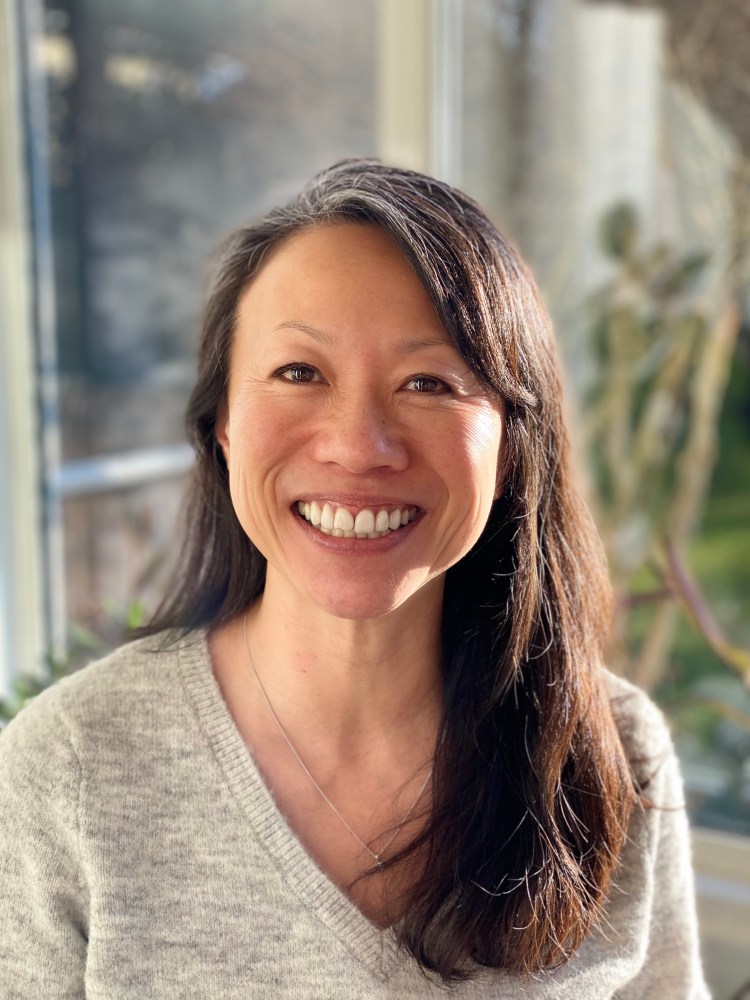
Welcome back to the second instalment of Sharon Tao’s journey from an ordinary life in advertising, to teaching orphans in Tanzania. It is an extraordinary feat: to be a leader on the world’s largest project empowering over 1.5 million girls in education, in 17 developing countries.
In case you missed it click on Part 1 to read the full chapter.
In Part 1 we learn how Sharon went on a camel expedition into the Sahara desert. Here she meets Winnie (not the puppy). Winnie shares her story about volunteering – at night – in a police station in South Africa.
This serendipitous meeting and exchange of stories inspires Sharon to quit her salubrious job. She flies to Tanzania and becomes a volunteer (teacher by default). Literally within one month of the camel expedition.
Halfway through my first interview with Sharon, I realise the profound nature of this topic. There is no way in such a short time, can I capture the gravity of Sharon’s story in one simple interview. It’s the kind of experience you could write a book about. Or in Sharon’s case complete a PhD, which is what she did.
So we continue Sharon’s story here. How did her experience in Tanzania and Rwanda drive her back to studying?
ST: When I went back to Tanzania I was feeling burnt out by year end. My classes were 80-100 kids and I was teaching several streams of Year Five English. I remember thinking: ok I’m volunteering, got my nest egg from advertising so that will carry me through. My outgoings are very small. That’s fine, but I can’t volunteer forever.
It’s exhausting work. I have never worked so hard in my life. I have such respect for teachers. I worked harder as a volunteer in that school than I did in advertising.
I already feel burnt out and I’ve only been doing this for a year. I can understand why teachers feel burnt out in classrooms of 25! There is a lot of attrition in an African context. One reason is people don’t have any choice. So they stay in teaching.
When I was backpacking in Cambodia I came across a fascinating kind of model. Basically, it was a café. Proceeds go to an orphanage and the older children were being trained to work in the café.
I met the gentleman who was looking to expand this model and I suggested Africa: I know the Tanzanian context very well.
He said: absolutely but his work was more about the post conflict context. There are a lot of street-children that are a product of that conflict.
I thought, well, Rwanda is right next door…. So that was the rationale for going to Rwanda.
I spent the next six months in Kigali putting together a proposal for the school (The Global Child). And thought I should be volunteering whilst I’m here.
I went to the primary school closest to where I was staying. Knocked on the door and introduced myself to the Head teacher.
She thought I was bonkers because there was no culture of volunteers at the school.
There was (a culture of volunteers) in Tanzania. They were used to volunteers coming through. My French was good enough and English was a subject. And (big laugh) she said: ooh – kay?
They were lovely. I really enjoyed that school very, very much. So, I did volunteer teaching whilst doing the scope work with a view to opening the school in Rwanda – that being my livelihood; a job opening.
I ended up disagreeing with this gentleman about the model. I developed something based on the context and my knowledge of that context. When I presented it to him, he said: no I want it to be exactly the way it is in Cambodia.
I said: Kigali is not Phnom Penh; it was a different conflict. There are different needs here. You can’t just take one model and stick it elsewhere.
He disagreed. I intuitively thought if we’re not seeing eye-to-eye at this point then maybe not.
Then when I was in London visiting a friend; she was studying at the Institute of Education in London. She knew all this backstory and suggested I look into their MA in Education and International Development.
I thought oh, that’s interesting. At that point I wasn’t entirely sure what next. When I saw the MA, I thought I need to understand globally what international organisations are doing about education in Africa.
The next day I went into the registry office the Institute of Education and expressed my interest in this Master’s degree in Education and International Development.’
They suggested I talk to the course leader. His is Anelle. I knocked on his office door and said: hello, I am interested in this MA. He replied: well, one of the requirements is you have to have some field experience.
I said: I’ve just been a teacher in Tanzania for almost a year and a half and six months in Rwanda.
And he said: ‘ah unaongea Kiswahili?’ And I said: ‘ndio nazungumza kiswahili!’ and we just started speaking Swahili (big smile and laugh).
I sat there thinking all the stars were aligning. Interestingly, he was originally from Uganda. When Idi Amin made all families of Asian descent leave Uganda, his family was sent to the UK. They were not allowed to stay. They were sent to Canada. He grew up in Toronto – not that far from me!
We’re having this conversation in Swahili. And it leads into this. And I thought, this is just too much! These signs were too fateful for me to ignore. This is what I need to do. That’s why I did this MA.
The reason I did the PhD was because I loved it so much. It goes back to applying these theories and approaches I was learning, and applying it to the realities.
I was applying what was called the Capabilities Approach. When I read it – it blew my mind.
Yes! That’s what development is about. It’s not about money in someone’s pocket it’s about opportunities to actually do what they want to do. Money helps that, but there’s so much more that constrains a person’s opportunities.
So, I applied that to teachers in Tanzania. I had so much respect and appreciation for the teachers I worked with. I used this approach to try and explain some of the practices and procedures that were happening in Tanzanian classrooms.
For that particular paper, my tutor said: this is quite interesting, Sharon, I have never seen anyone apply the Capabilities Approach to teachers before. You could probably turn this into a PhD.
I hadn’t even thought about that. It was another fateful seed that was planted. At that point I was just loving it. I wrote a proposal and put in an application for a grant.
When they both were accepted, I thought…. ‘oooh-kay (big laugh!) I am really enjoying this. I loved being in London; I needed a break anyway. And that’s why I did the PhD right of the back of my MA.
SNB: And from there?
ST:From there it took me 4 years to finish and it was 2012. A woman I did my MA with had been working for Cambridge Education. They had been implementing this *DFID program in Nigeria.
*Department for International Development, UK. Now closed and replaced by FCDO (Foreign Commonwealth & Development Office).
She used to be a VOS teacher in Nigeria and for her it was like a homecoming. It was great. Instead of being a volunteer teacher, she was working at a systems level with the Ministry of Education. It was a similar theme.
When I was finishing, she emailed me and said, ‘I have this piece of work on female teachers. It’s to understand why it’s so difficult to deploy female teachers to rural schools. I know in your PhD you were applying the Capability Approach to teachers. This consultant just flaked out on me. It’s a two-week gig. Do you have time? Would you be interested in doing this?’
‘Yes! Of course, I would!’
For two-weeks I went to Nigeria and did this work with female teachers. Again I used what I was doing in my PhD to try to explain why female teachers weren’t, or avoiding deployment to rural areas. This knowledge was used to help the program put together packages.
Not just incentive packages. It’s about opportunities it’s not just about money. It’s about security.
There’s a lot of reasons why female teachers don’t want to be in rural areas. So if this program could address some of those things, that might be more appealing for female teachers.
That’s how I started with a two-week short piece of work for them and then my CV was floated into the system. Then they rang me up and offered me a job.
At that point I was kind of worried. Where to next? After my PhD…. Academia is generally a route that most people go into. But at the time in the UK, they were raising fees and there were lots of cuts. It still is. Academia is very competitive. I had a lot of fun doing the short-term consultancy piece of work, so I thought why not let’s go check it out.
Ironically enough, there were a lot of people that had done work for Cambridge Education. We had always heard about this organisation in my faculty. And there were always the scary private sector consultants.
My only anecdote about that interview was that I had heard a lot about CE operation – the scary private sector people. So when I went into the interview I was completely myself. I wasn’t trying to impress them. I spoke exactly my thoughts on things. They were asking about my PhD and it was a lovely chat… Towards the end they said: ok we’ve asked you a lot of questions, do you have any questions for us?
I said: yes, how do you make money? I’ve heard a lot about the private sector, and I want to understand how you make money?
SBN: What a great question…
ST: Well, I just thought I’d be honest. And to their credit they were very candid. They talked about irrespective if you are a consultancy or an international NGO, like Save the Children, you build in a surplus because you have to cover overheads.
And Save the Children might have overheads and have the surplus on the programs that they’re delivering. But if they have extra surplus that might go into other programming and all the rest of it.
Our surplus goes back into our employee-owned company. It doesn’t go into funding other programs.
At that point I thought, oh-kay fine. Everyone has a surplus and everyone builds it in to use it differently. Then I had a second interview with one of them, who ended up being my line manager. Again I was completely myself. They had just won a project in Legos, Nigeria to support private schools. Because in Legos there is a proliferation of private schools.
And we’re not talking about fancy, international private schools, we’re talking about some woman opening up her living room and charging people. This program was to help, not necessarily regulate it but support some of these private schools to provide better quality education.
But coming from my PhD as sort of a very ideological student I fundamentally have a problem with private schooling… How dare you (Laughs out loud) … take on private schools, even though it’s DFID funded. How dare you take away provision from the state.
The state should be providing it. It’s a human right. We had this complete debate in what was my second interview (laughs out loud). I explained how much I fundamentally disagreed with private provision of education.
I remember, it was a phone interview, hanging up and saying: oh my god!’…. (Laughs out loud). They offered me the job and that spoke volumes to me about the fact that I could be myself. I could have very differing opinions to others and voice them. People listen and are respectful.
I have been working with them for eight years now. Which is longer than I envisaged myself working in any organisation.
SNB: And how does it feel now? Coming from all your amazing experience, volunteering, through your Masters and PhD and now this massive project, The Girls Education Challenge, that you’re on now?
ST: It’s full circle… What I think is so helpful in my work now, is that I have so much empathy for the teachers and the students.
Now at this very macro level that I’m working, Cambridge Education does a lot of bi-lateral programs. So those programs are funded by UK Aid and they work directly with Ministries of Education.
Even on those programs I might be helping to train thousands of teachers, but I can very, very much empathise with those teachers. And know what it feels like to be in a classroom of 80-100 kids and have the pile of books to mark every period… And how demoralised teachers are.
The basis of my PhD was teachers are often vilified in African contexts. Tanzania in particular. Absenteeism, rote teaching, corporal punishment, I mean there are a lot of things and they all happen.
I was not arguing that it didn’t happen, but there are a lot of complex reasons for why that’s happening.
Unless you understand those nuanced complex reasons, any intervention that you bring in to change those behaviours are not going to be efficacious. You have to understand why teachers are absent, not because they’re feckless and lazy. That’s not why.
The work from my PhD I could use and apply in my work at Cambridge Education. Today, I am one step away. We’re not implementing those programs. We support the implementers that are training teachers. So I am even one more step farther away from working with teachers now. But I still very much have that focus of those end beneficiaries, whether it’s the students or the teachers. It’s was such a profound experience for me that it underpins everything that I do today.
SNB: I think it’s very inspiring to hear!
ST: It’s a funny one. It’s one of those things where I, don’t get me wrong – I don’t think about it every day.
To be honest, I do have to have to think about those teachers and the students. When I get demoralised in my job, with another spreadsheet… You get into the minutiae of the day-to-day and I think, oh this job is so annoying right now… Then I have to step back and remind myself why am I doing this again.
What is the end result?
Hopefully…. if we’re successful: to support teachers and students and the opportunities that they have.
And if we’re not, then we’re not doing a good job in supporting them. And I often have to step back and ask why am I doing this?
SNB: I read your blog post on the UNICEF website, about the Theory of Change. You talk about restraints such as community, home life, class rooms, policy and systems. Have you seen that change in the time you have been working on this program?
ST: (Big sigh….) Hmmm. That’s interesting. It was actually a critique of a lot of girls’ education programs because they’ll focus on one or two constraints at a particular level.
The problem is the constraints are quite comprehensive. So there are NGO’s that focus mostly on the community level and that’s very important, because if you can’t change the mindset of parents and they just want to marry their daughters off at 13 and so on.
These 13-year-old girls don’t have any menstrual hygiene management. And it’s terrifying the way that girls have to deal with their periods. It’s horrendous. So yes there are very targeted interventions that absolutely improve girls lives but there are so many other constraints at the classroom and policy level that it might get undermined.
The argument I was trying to make was that in a perfect world we would try to address all the constraints from the home and family all the way to the policy and system.
Not possible for one program to do that. So why don’t we all band together? If we’re all working in Tanzania and there are several different programs doing different things – let’s coordinate.
Because what I see on the ground is – Silos (singing). And no one coordinating. Unfortunately it’s tied to funders and their agendas. I mean, there’s a lot of reasons why.
Ultimately at the end of the day, the Ministry of Education should be the ones harnessing all of these girls’ education programs. You’re doing menstrual hygiene kits, you’re doing work with parents, you’re doing teacher training…. Why don’t we get you all together, particularly in the same geographical regions so at least those girls have some kind of holistic, comprehensive addressing of constraints.
That was the argument… it’s a Think-piece. (Laughs out loud!) And that’s an ideal world. The program I work on now is part of the critique I was making.
A lot of the projects that the GEC focuses on are those targeted programs that might target certain constraints but can’t address all of them from the macro to micro level and so there are gaps.
It’s getting late in the afternoon. My husband with our two toddlers bowl in the front door. A burst of loud giggles and heavy-little-footsteps bundle their way into the room. Sharon immediately engages in warm and friendly conversation with my 3-year-old daughter.
My head is spinning, trying to absorb all this new information. I smile at my daughter. How lucky are we? I can’t help but reflect on my own education as a child in Australia. The racism in my early primary school years was the first to come to mind. And then dropping out of high school for reasons I didn’t understand at the age of fifteen. I had my own constraints. But to think of those challenges millions of girls in Africa, Afghanistan, Nepal or any other developing nation have to overcome. It certainly puts things into perspective.
Next time we discuss in more detail some of the obstacles Sharon confronted during her time volunteering in Africa. As well as the roadblocks today for the GEC and the millions of girls trying to get an education.
Stay tuned for Story No. 1, Part III.
 Scene By Nina
One thought on “Part 2 | Dr. Sharon Tao, Educational Director for the Girls’ Education Challenge shares her journey.”